EQ
How to EQ piano
A piano covers the whole range, so EQ it for the mix around it: cut below 60 Hz when a bass plays, cut the boom between 200 and 300 Hz when it clouds the mix, take the hardness near 3 kHz down a touch when the hammers bite, and add air last. The middle is the piano: leave 400 Hz to 2 kHz alone.
What the piano is for in the song
In a digital session the piano is a sampled instrument, and a good one sounds finished on its own, which is the trap: a piano that sounds perfect alone covers the whole range, and in a mix it sits on the bass, the pad and the vocal at once. Decide what the piano is for before any band. If it is the song, EQ almost nothing. If it is one part among six, make it smaller, never quieter, and the four moves below are how.
What you are hearing
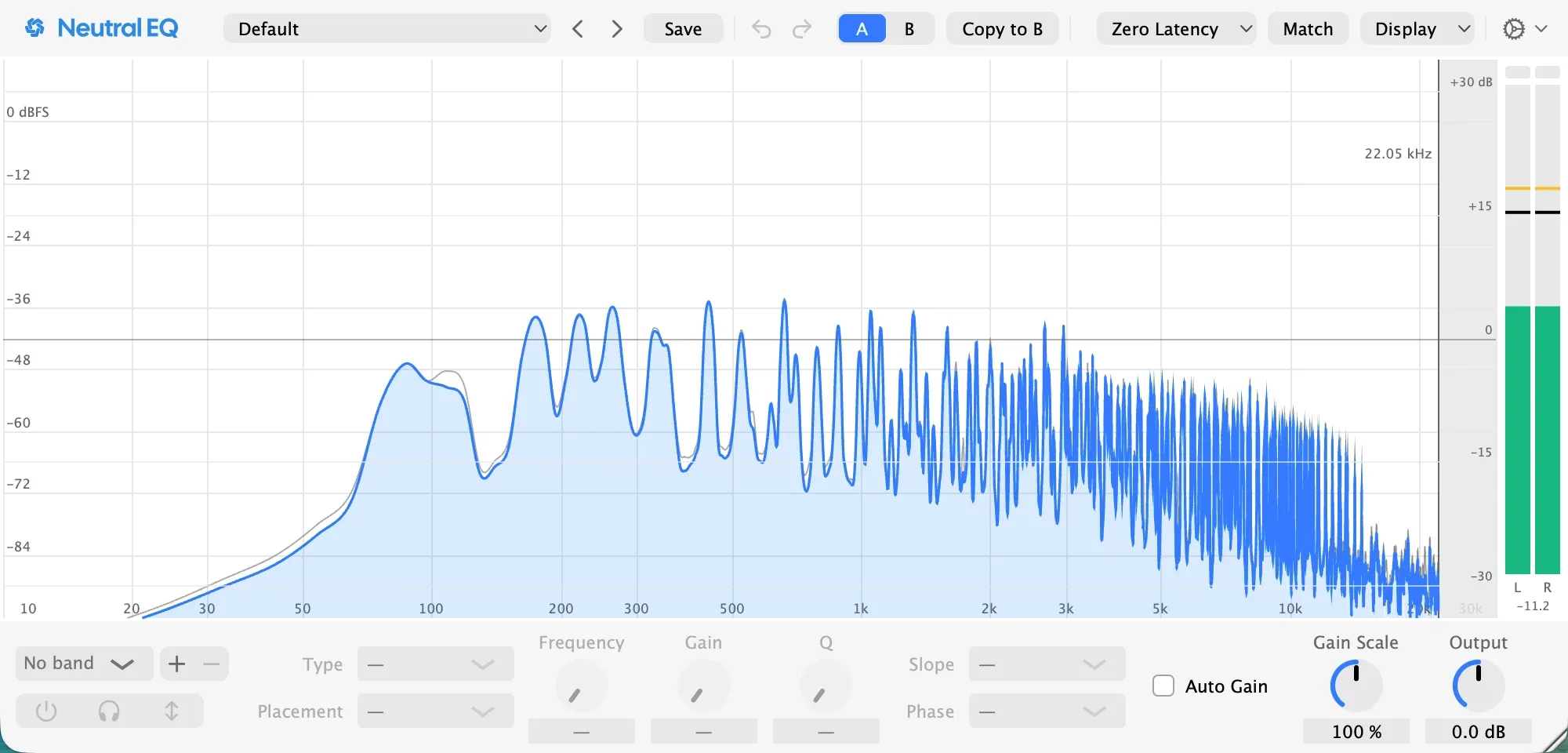
A piano has four regions, and the picture above shows them on this session’s chords. The left hand is 40 to 250 Hz, and the room’s boom lives at the top of it, here near 250 Hz. The body is 300 Hz to 2 kHz, the part that is the piano, the part to leave alone. The hammers are 2 to 4 kHz, here biting near 3 kHz, where a sampled piano turns hard when it is played loud. The air is above 8 kHz, the strings’ shimmer.
1. Cut the lows by the song
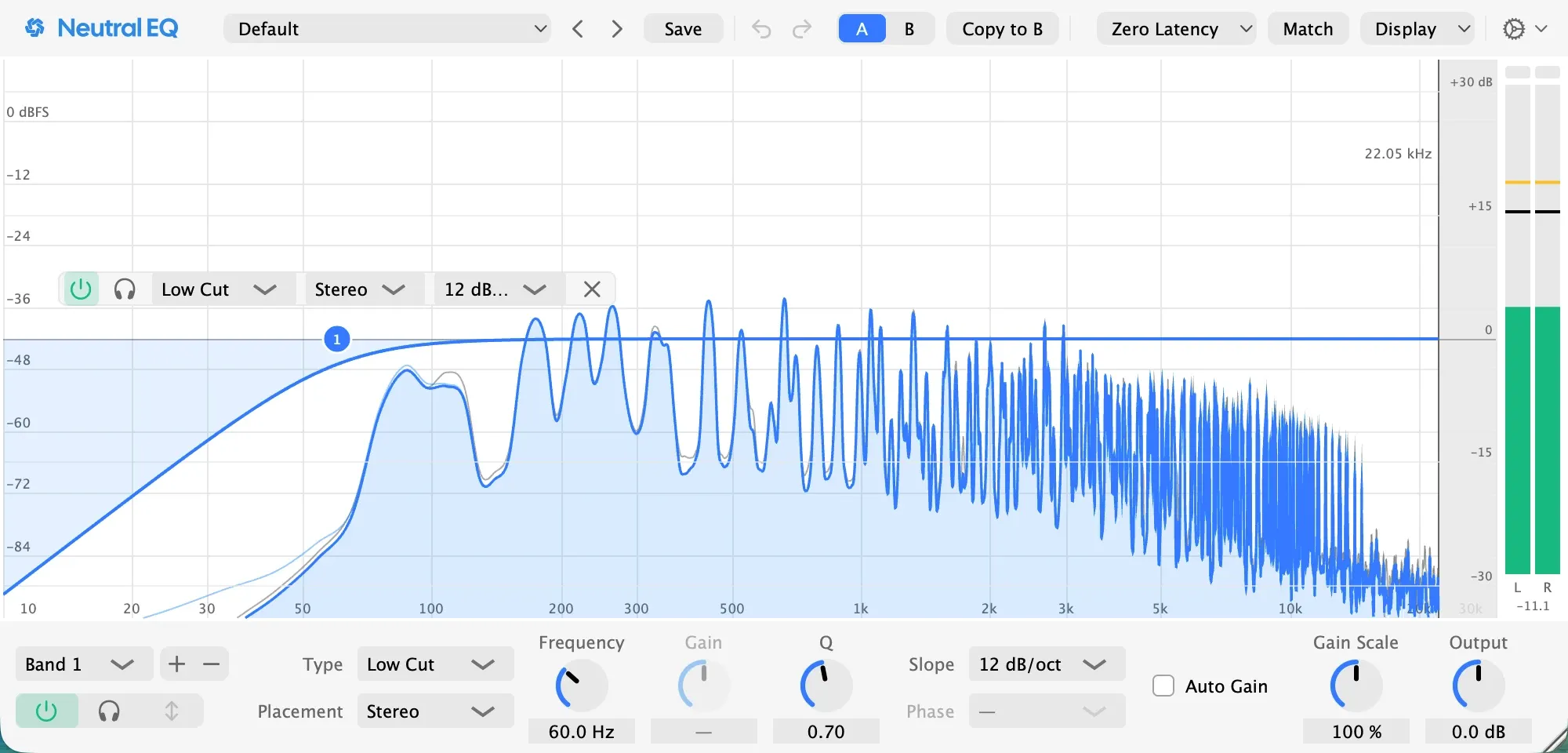
When a bass plays, a low cut at 60 Hz with a gentle 12 dB per octave slope gives it the bottom and costs the piano nothing a listener notices; in a dense mix the cut can sit at 100 or 120 Hz and the piano still sounds whole, because its weight is in the harmonics. When the piano is the bass, leave the cut off or set it at 30 Hz.
2. Cut the boom
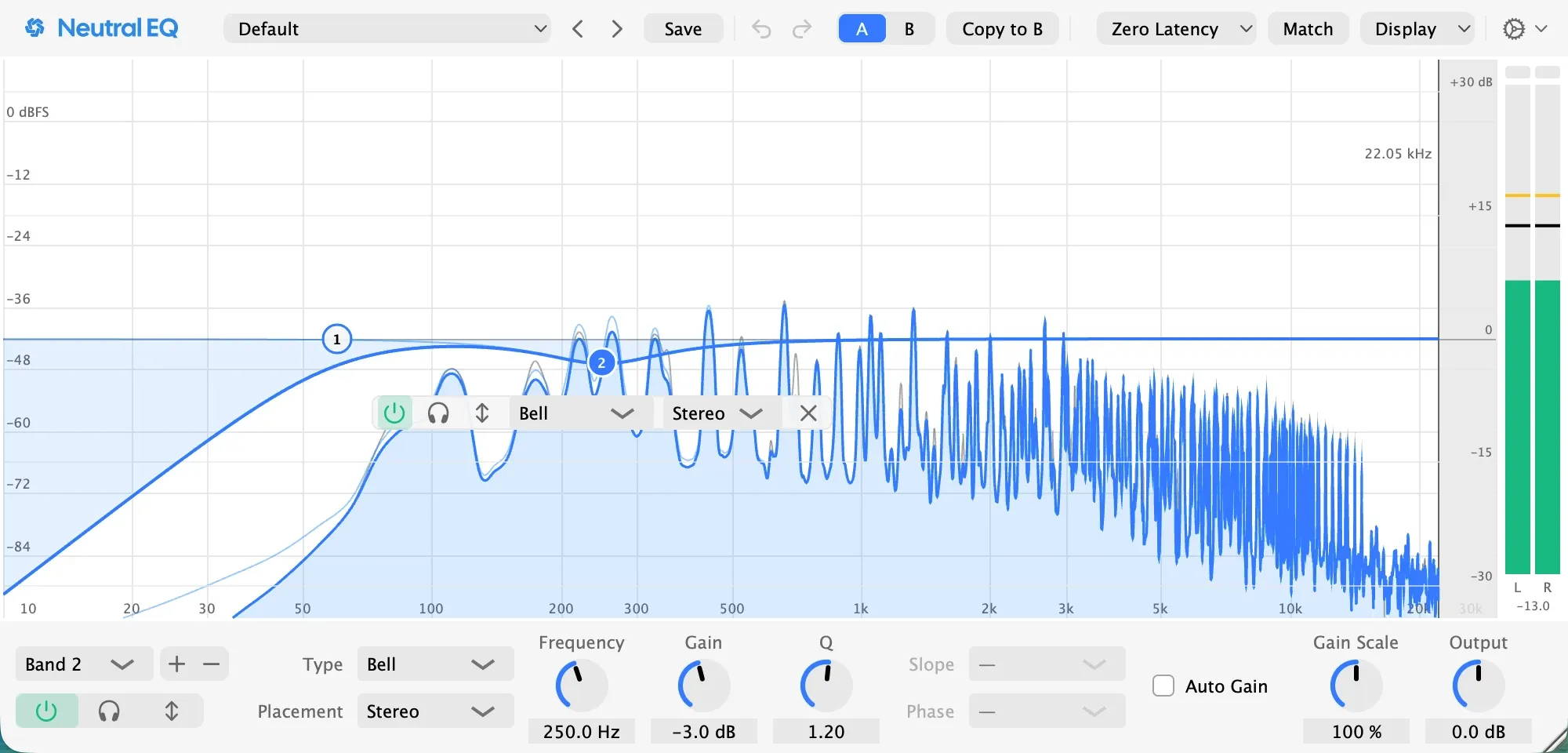
Sweep a narrow boost between 150 and 400 Hz while the chords play with the beat. Where the piano turns cloudy and the bass disappears, stop; on this session it was 250 Hz. A cut of two to four decibels there, here three with a Q of 1.2, clears the cloud a sampled piano brings from its room and the pedal adds to.
Pro tip: if the cloud comes only when the sustain pedal is down, make the cut dynamic, so it acts on the held chords alone.
3. Take the hardness down a touch
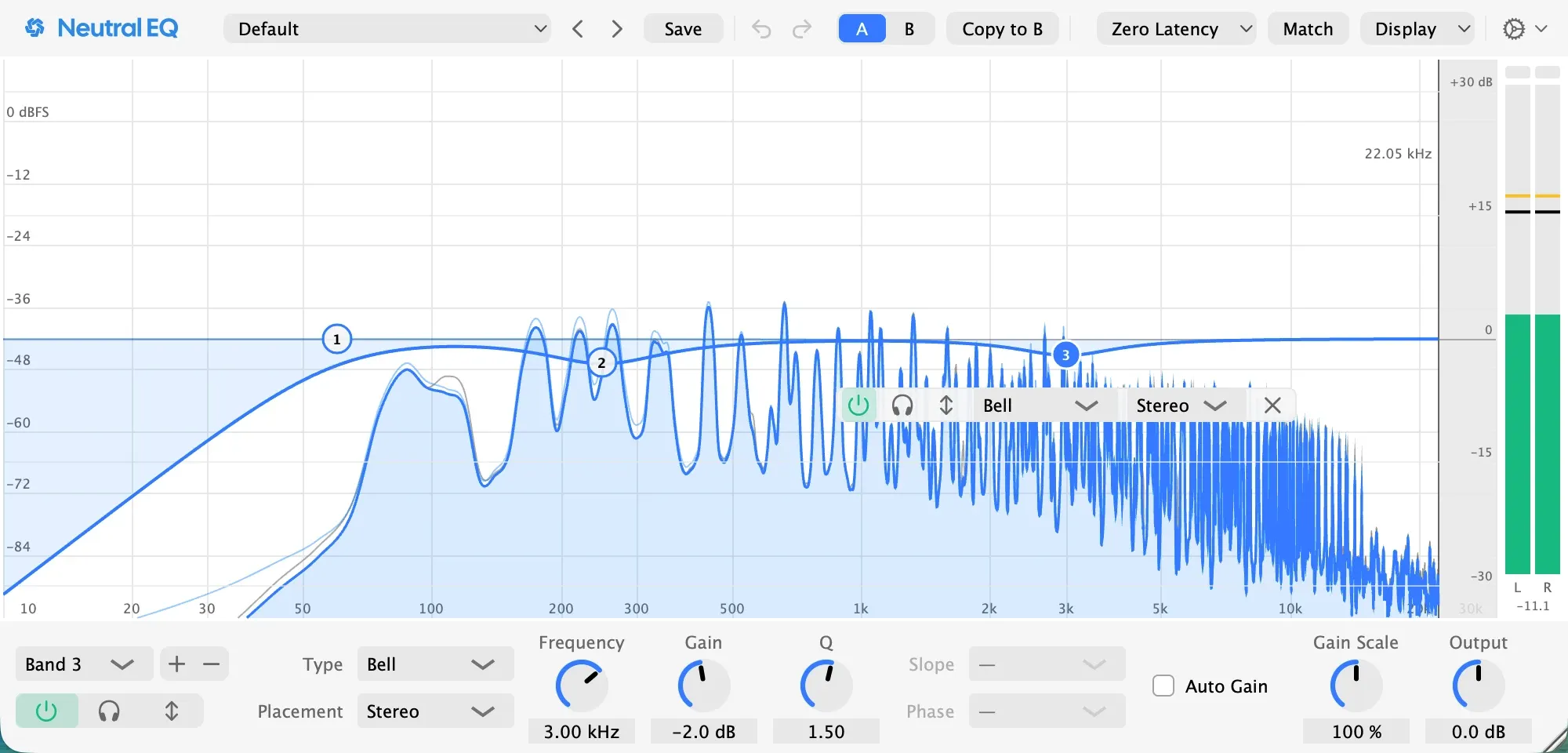
A sampled piano played loud bites between 2 and 4 kHz, the hammers more than the strings. A cut of a decibel or two there, here two at 3 kHz with a Q of 1.5, softens the bite without dulling the piano, and it is also where a vocal lives, so the same cut makes room for the singer.
4. Add air last
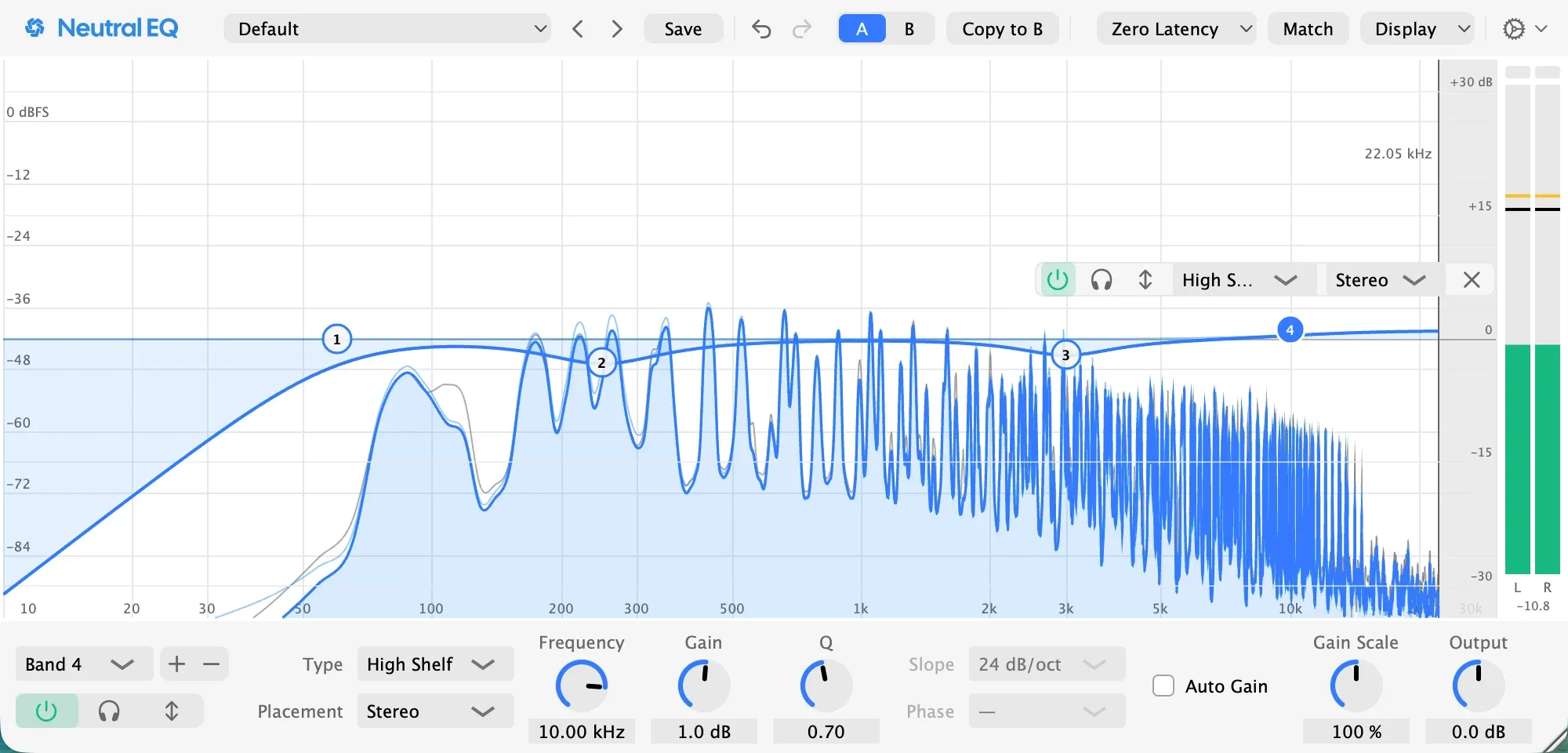
A high shelf of a decibel above 10 kHz brings back the shimmer the cuts took with them. More than that lifts the hammers’ click and the sample’s noise; a piano wants less air than a vocal.
Check it
Switch the EQ off and on with the whole song playing. The bass should be clearer with it on, the vocal easier to hear, and the piano still the piano. If it sounds small, step 1 is too high or step 3 too deep; if it still clouds the mix, go back to step 2 rather than adding bands.
Pro tip: judge at matched level, with Auto Gain on, and by switching the band off in the full mix rather than soloing it.
If it was a real piano recorded with microphones
Same four moves, with the room decided by the song: a low cut at 40 Hz for a piano that carries the low end, 80 Hz or higher for one in a band. Two microphones bring two rooms, so the sweep in step 2 usually finds two spots, and the pedal’s thump under 60 Hz is the low cut’s job.
In Neutral EQ
The Keys and Synths folder holds this page’s starting point: Piano Clarity is the boom cut and the hardness cut together. Load it, drag its bands to where your instrument rings, and the analyzer shows the chords as they play under the curve, with Note Names on printing the left hand’s notes as letters. The presets page lists the folder.
Going further
Make it smaller, never quieter. A piano turned down still covers everything; a piano with its lows and its hardness trimmed sits in its place at full level.
Keep the low notes in the centre and let the top spread. With mid and side placement, a low cut on the sides keeps the left hand mono while the stereo sample stays wide above.
The pad and the piano are one fight. When both play, one of them loses its lows and its boom, and how to EQ shows that cut on the pad, which is usually the one to give way.
Questions people ask
What are good piano EQ settings?
There are no settings, only moves: a low cut near 60 Hz when a bass plays the low end, a cut of two to four decibels where the sweep finds the boom between 200 and 300 Hz, a cut of a decibel or two near 3 kHz when the hammers bite, and a shelf of a decibel above 10 kHz if the mix wants air. The numbers on this page are the ones that worked on this session.
How do I EQ a piano in a mix?
Decide what the piano is for in the song. If a bass plays, cut the piano's lows at 60 Hz or higher and let the bass own the bottom; if a vocal sings, take a decibel or two from the piano where the voice lives. A piano alone needs almost nothing; a piano in a full mix needs to be made smaller, never quieter.
Why does my piano sound muddy?
The boom between 200 and 300 Hz, which a sampled piano carries from the room it was recorded in and the pedal adds to, and the left hand sitting on the bass. A cut of two to four decibels at the boom, found with a sweep, and a low cut near 60 Hz clear most of it.
Related pages
Made in Neutral EQ on a session built for this page: a drum machine beat, a synth bass and a sampled-style piano in Neutral Tracks, the EQ on the piano. Every picture is the plugin as it was set for that step.