EQ
How to EQ vocals
Four moves: cut below 90 Hz, find the room's boom or the box with a sweep and cut it, let a dynamic band tame the esses only when they hit, and add a little air last. Leave the middle alone, because 300 Hz to 3 kHz is the voice. Shown on a sung line in a small digital mix.
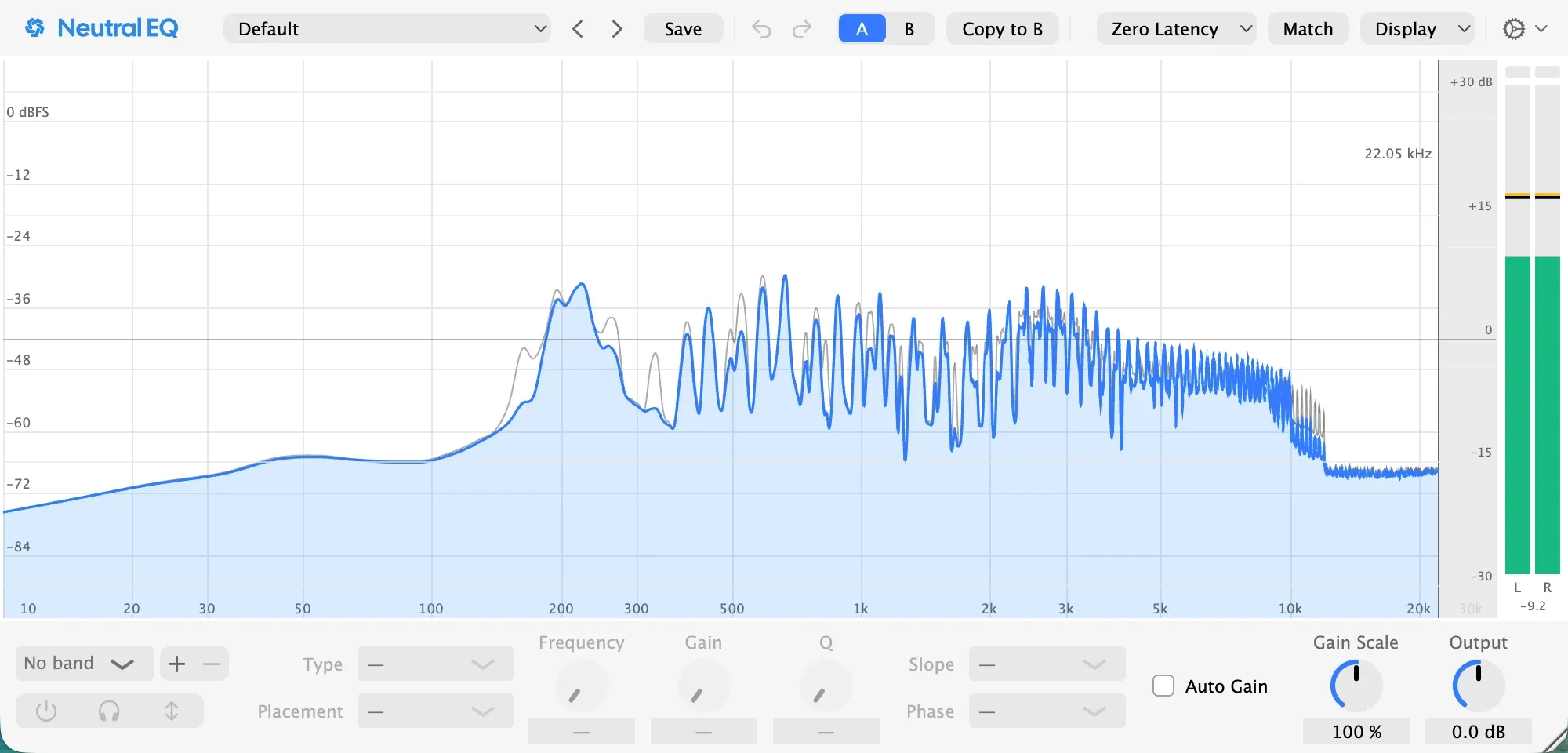
Where the voice came from
In a digital session a vocal is either a take on a USB or condenser microphone in a room that is not treated, or a vocal sample from a pack. Both get the same four moves; the recorded one needs them more, because the microphone brought the room and the stand along. Pick the take or the sample first: no EQ makes a thin take full, and a second pass closer to the microphone beats any boost.
What you are hearing
A voice has four regions, and the picture above shows them on this session’s line. The rumble under 80 Hz is the stand, the room and the breath, never the voice. The body is 150 to 300 Hz, and the room’s boom lives there too; on this session it sits at 210 Hz. The voice itself is 300 Hz to 3 kHz, the vowels and the words, the part to leave alone. The esses are 5 to 9 kHz, here around 7 kHz, and the air is above 10 kHz.
1. Cut what is not voice
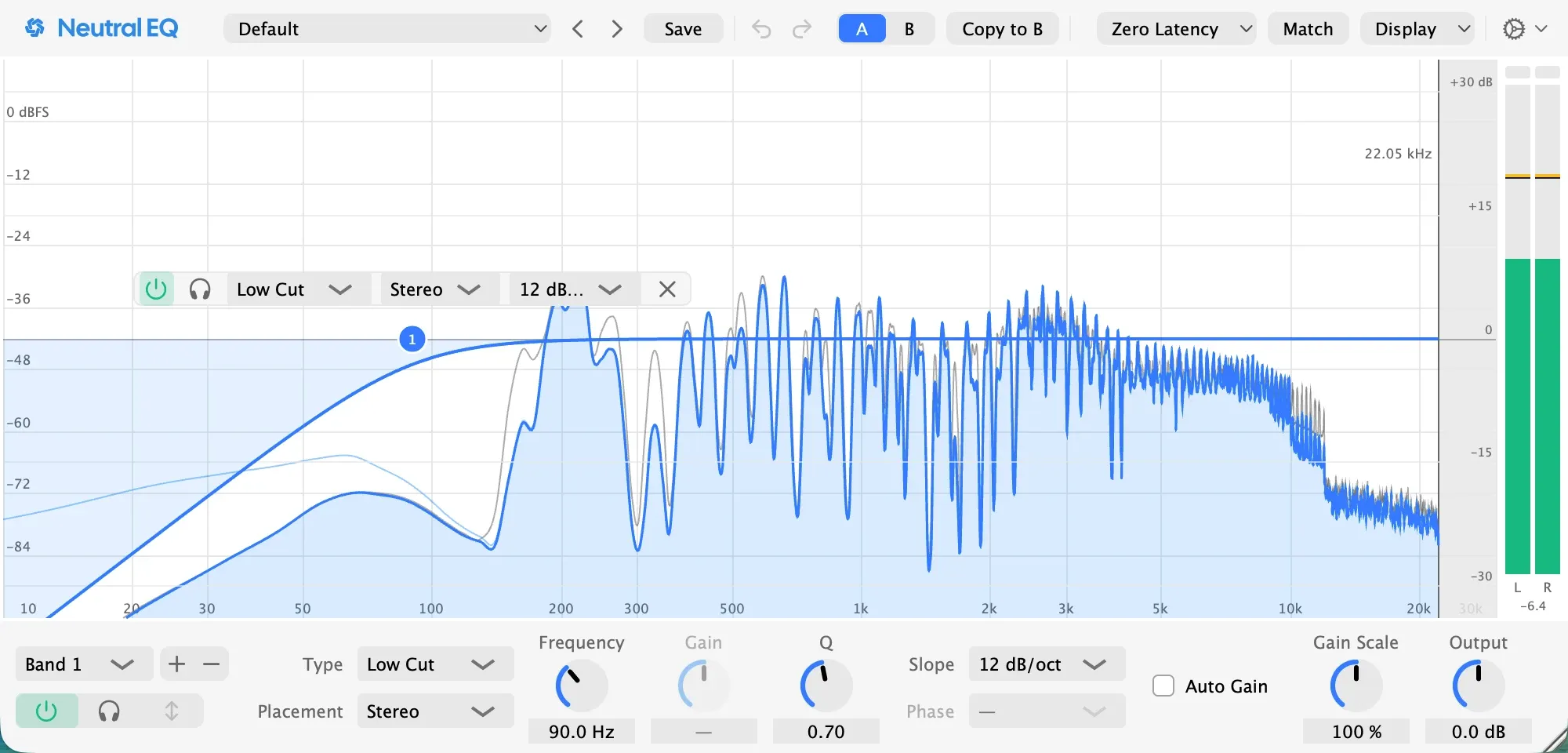
A low cut at 90 Hz with a gentle 12 dB per octave slope removes the rumble and nothing else. A deep voice with its lowest note near 90 Hz takes the cut at 70; a high one takes it at 110. The test is the lowest note of the take: the cut sits just under it, never on it.
2. Find the boom or the box and cut it
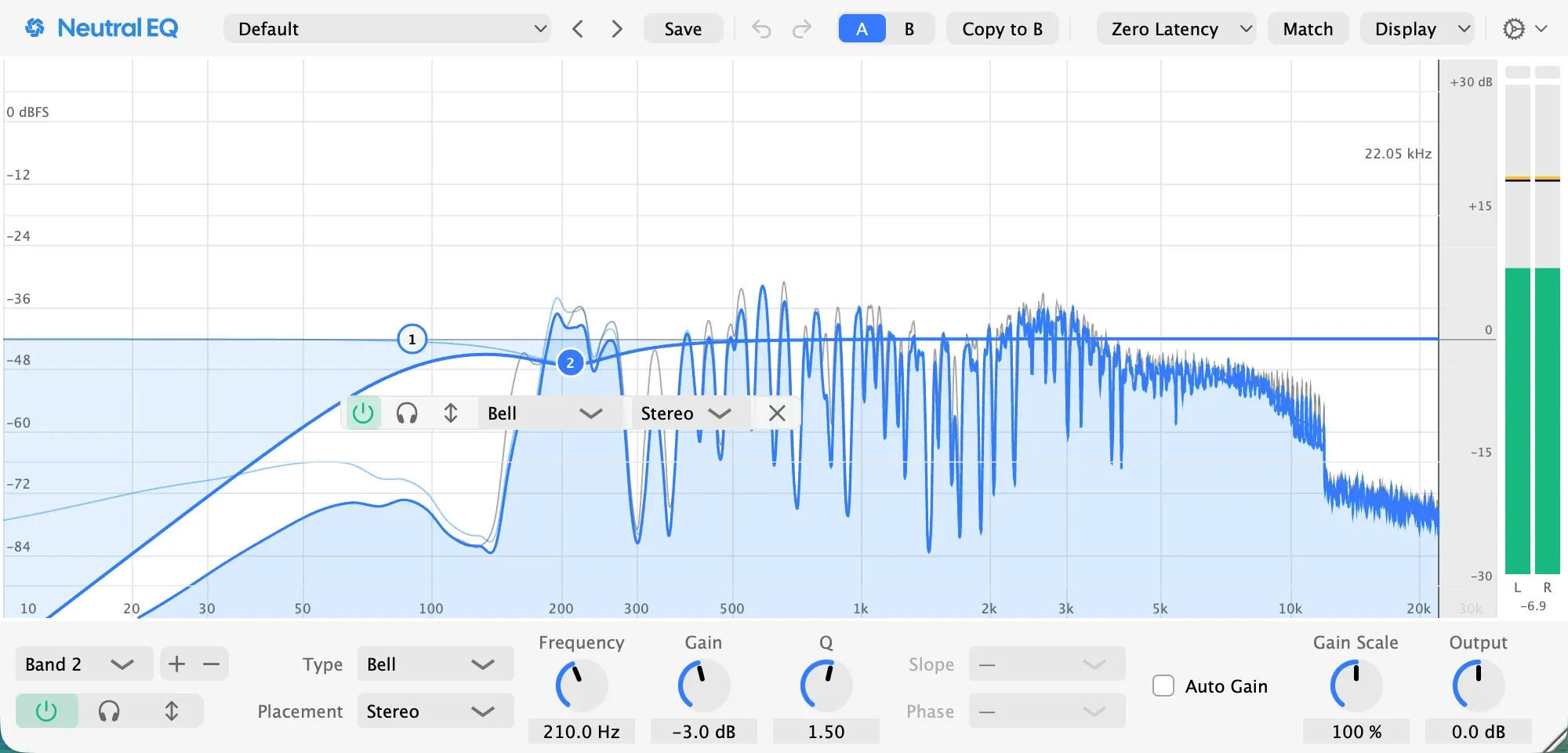
Make a narrow bell, boost it eight decibels and sweep it between 150 and 400 Hz while the line plays. The room’s boom or the microphone’s box jumps out; on this session it jumped out at 210 Hz. Turn the boost into a cut of two to four decibels, here three, and widen it to a Q near 1.5, then listen with the beat playing, because a cut that sounds right alone is often too deep in the mix.
Pro tip: if the boom comes only on the low notes, make the cut dynamic, so it acts on those and leaves the rest of the line alone.
3. Tame the esses only when they hit
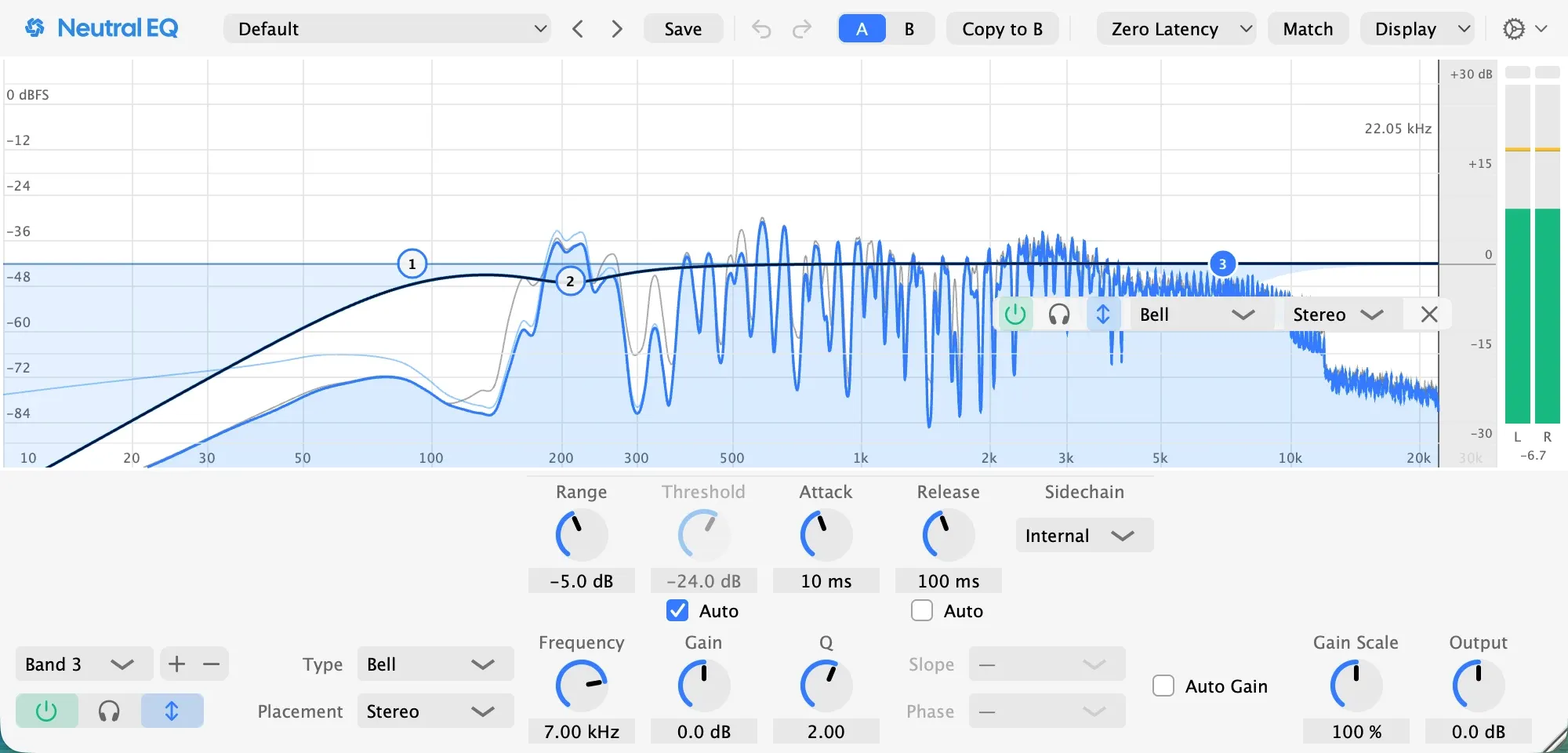
A static cut at 7 kHz dulls every word to fix a few. A dynamic band cuts only while the ess is there: a bell at 7 kHz with its gain at zero and a dynamic range of five decibels, so the band dips when the level crosses the threshold and returns when it does not. That is a de-esser made from one band, and the threshold sets itself to the line’s level.
4. Add air last, and only if the mix asks
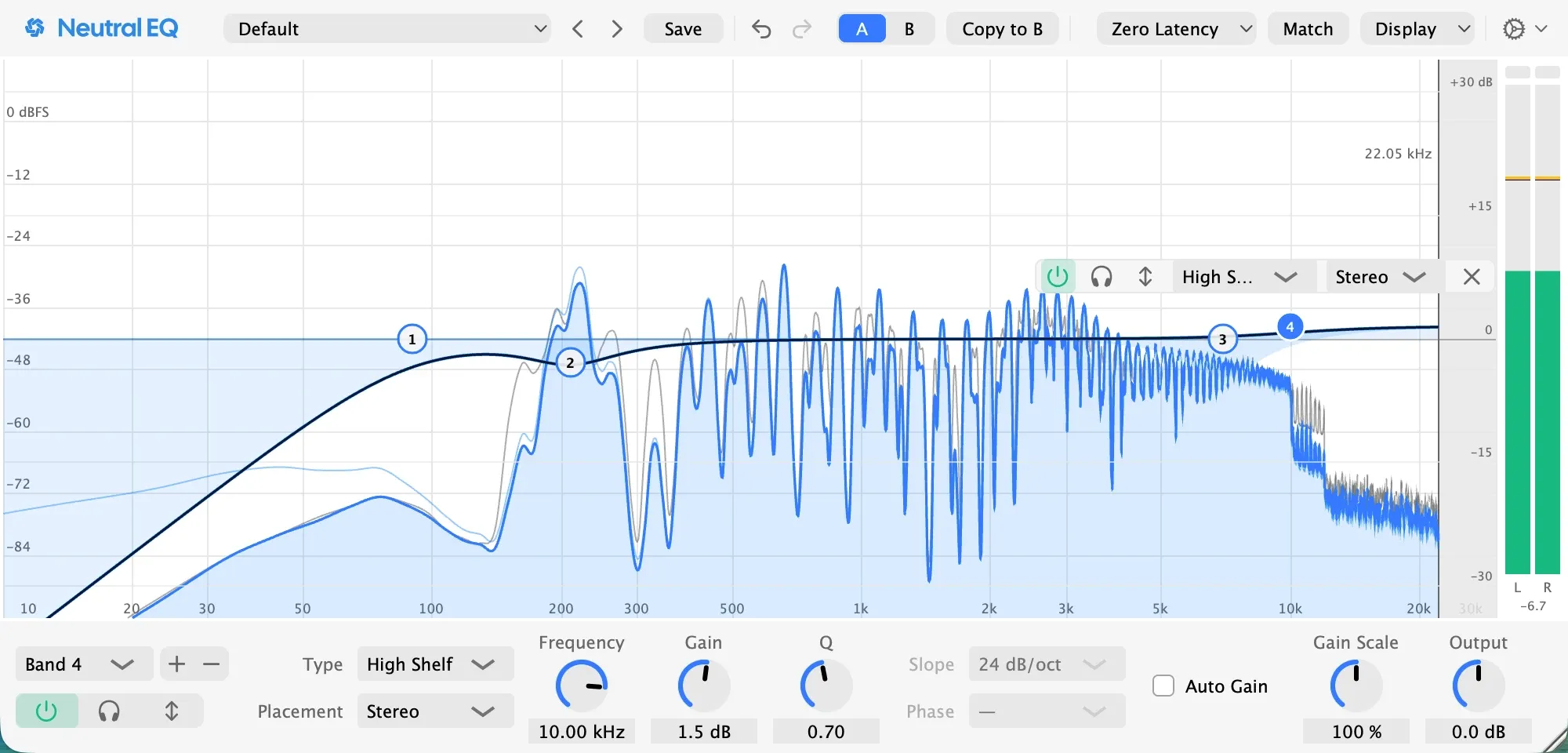
A high shelf of a decibel or two above 10 kHz, here a decibel and a half at 10 kHz, brings a voice forward without making it louder in the middle. It lifts the breath and the esses too, which is why it comes after the de-ess, and if the line starts to hiss the shelf is too high or too much.
Check it
Switch the EQ off and on while the song plays, then listen on the smallest speaker you own. The words should be clearer with it on and the voice no louder. If the voice sounds small, a cut in the middle is too deep; if it sounds honky, something is lifted between 500 Hz and 2 kHz that should not be.
Pro tip: judge at matched level, with Auto Gain on, and by switching the band off in the full mix rather than soloing it.
If the vocal was recorded in a room that is not treated
The boom step matters most. A bedroom has two or three resonances between 100 and 400 Hz, and the sweep finds each one; two cuts are normal where a sample needs one. The low cut earns its keep against the stand and the traffic, and a pop filter and a hand’s width more distance from the microphone fix more than any band can.
In Neutral EQ
The Vocals folder holds this page’s moves as starting points: Vocal De-Mud is the boom cut, De-Esser is the dynamic band at the esses, Vocal Air is the shelf, and Resonance Tamer is a narrow cut for one ring the sweep finds. Load the one you need, drag its band to where your take rings, and the analyzer shows the line as it plays under the curve. The presets page lists the folder.
Going further
Leave the middle alone. 300 Hz to 3 kHz is the voice. A cut there makes it small, a lift makes it honky; if the voice is buried, make room in the other sounds instead, a small cut on the guitar or the pad where the voice lives.
Presence is a mix decision. A lift between 2 and 4 kHz brings a voice forward, and so does cutting the same range on whatever masks it. Try the cut on the other sound first; it costs nothing on the voice.
Set the de-ess by ear, not by number. A range of three decibels tames; six flattens. Listen to the word “sister” with the band on and off and stop at the range where the esses sit in the line instead of jumping out of it.
Questions people ask
What frequencies should I cut on vocals?
Everything under about 90 Hz, which is never voice; the one spot between 150 and 400 Hz where the room or the microphone booms, found with a sweep; and the esses between 5 and 9 kHz, cut only while they hit, with a dynamic band. Nothing between 300 Hz and 3 kHz unless the sweep finds one narrow ring.
What are good vocal EQ settings?
There are no settings, only moves: a low cut near 90 Hz, one cut of two to four decibels where the sweep finds the boom, a dynamic cut of four to six decibels on the esses, and a shelf of a decibel or two above 10 kHz if the mix wants air. The numbers on this page are the ones that worked on this session.
Should I EQ vocals before or after compression?
Cuts before, because a compressor reacts to the boom and the rumble you have not cut yet; lifts after, because a lift before the compressor makes it work harder on what you lifted. The usual chain is a low cut and the boom cut, then the compressor, then the de-ess and the air.
Related pages
Made in Neutral EQ on a session built for this page: a drum machine beat, a synth bass, a pad and a sung line in Neutral Tracks, the EQ on the vocal. Every picture is the plugin as it was set for that step.