EQ
How to EQ guitar
Most guitar EQ is taking away what the amp added: cut below 100 Hz where the bass lives, find the mud between 200 and 400 Hz and cut it, tame the amp's fizz above 5 kHz, and make a small room for the vocal near 2.5 kHz. Leave 800 Hz to 2 kHz alone, because that is the guitar.
Where the guitar came from
In a digital session a guitar is usually a direct take through an amp plugin, or a loop from a pack already recorded through one. An amp and a cabinet are an EQ of their own, and most of what this page cuts is what they added: a thump under the lowest string, a mud the cabinet piles up at 300 Hz, and a fizz above 5 kHz that the real speaker would have rolled off. Change the amp or the cabinet before you reach for a band; a different cabinet fixes the fizz better than any cut.
What you are hearing
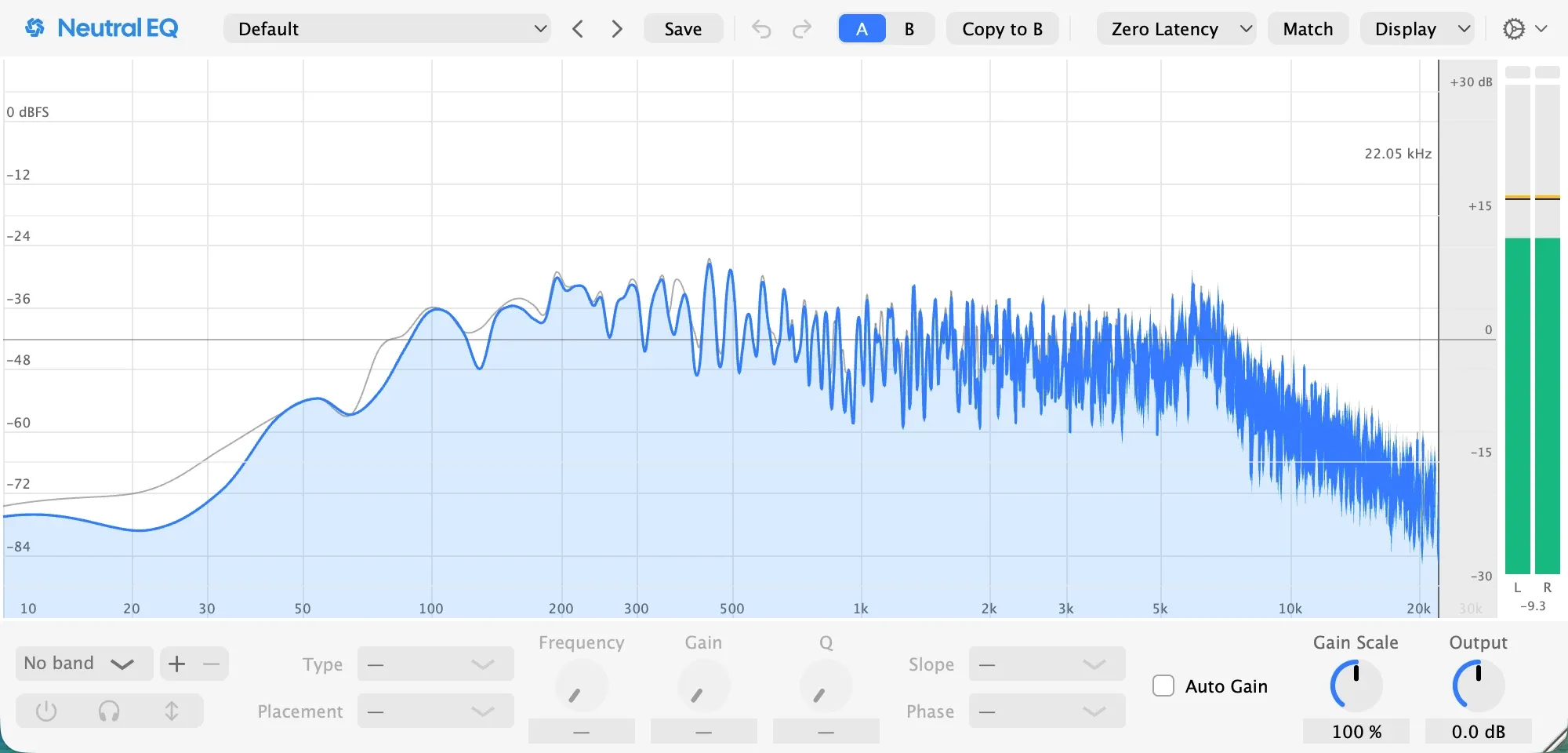
A rhythm guitar through an amp has four regions, and the picture above shows them. The thump under 100 Hz is the amp’s low end sitting where the bass plays. The mud is 200 to 400 Hz, here a bump at 300 Hz. The guitar itself is 800 Hz to 2 kHz, the body and the strings, the part to leave alone. The vocal’s range, 2 to 4 kHz, is where a guitar and a singer collide. The fizz is 5 to 8 kHz, here at 6.5 kHz, the amp plugin’s hash.
1. Cut the thump
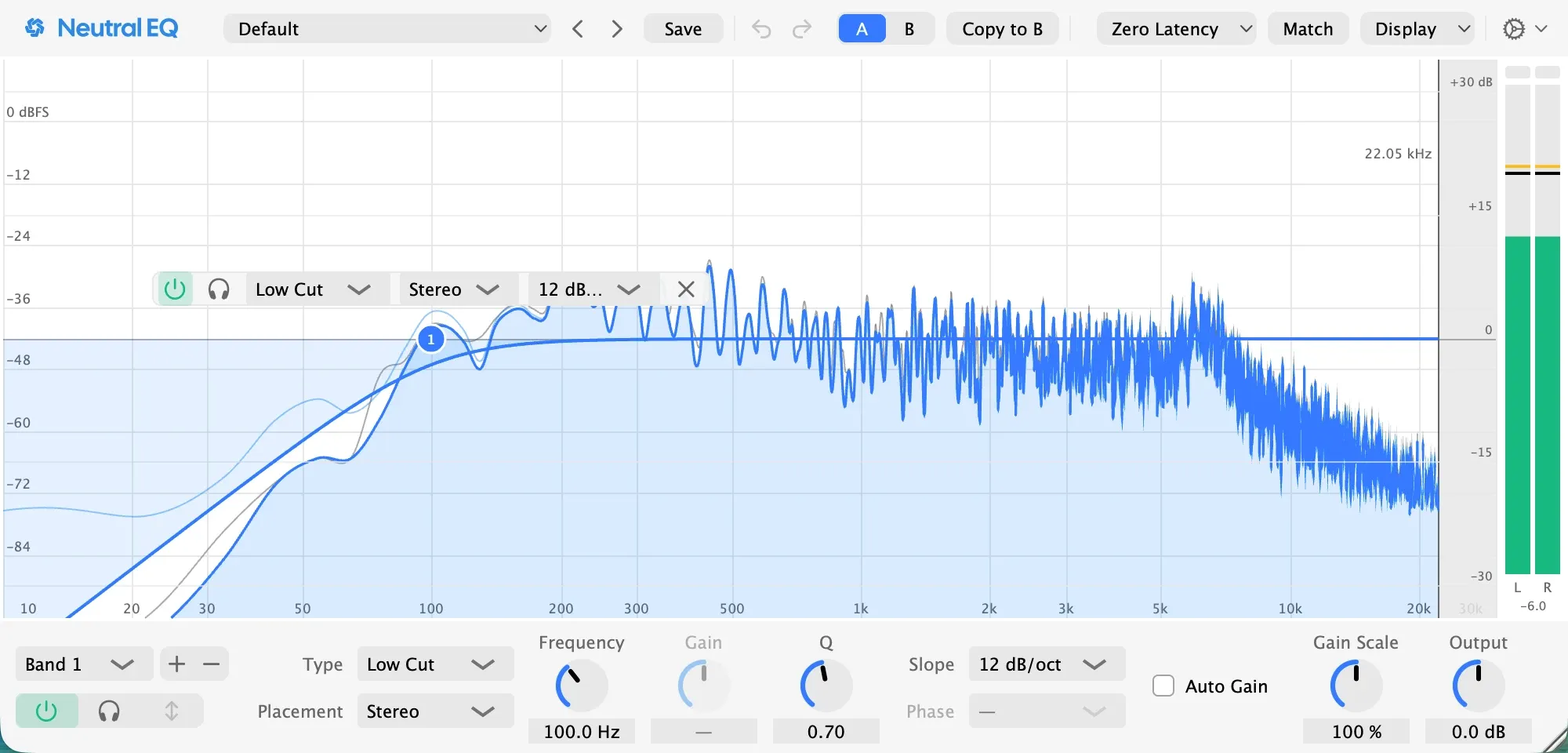
A low cut at 100 Hz with a gentle 12 dB per octave slope leaves the bass and the kick to own the bottom. A rhythm guitar loses nothing a listener hears, because its lowest string sits at 82 Hz and its weight lives in the harmonics above; a heavy guitar takes the cut at 120 Hz, a clean one at 80.
2. Find the mud and cut it
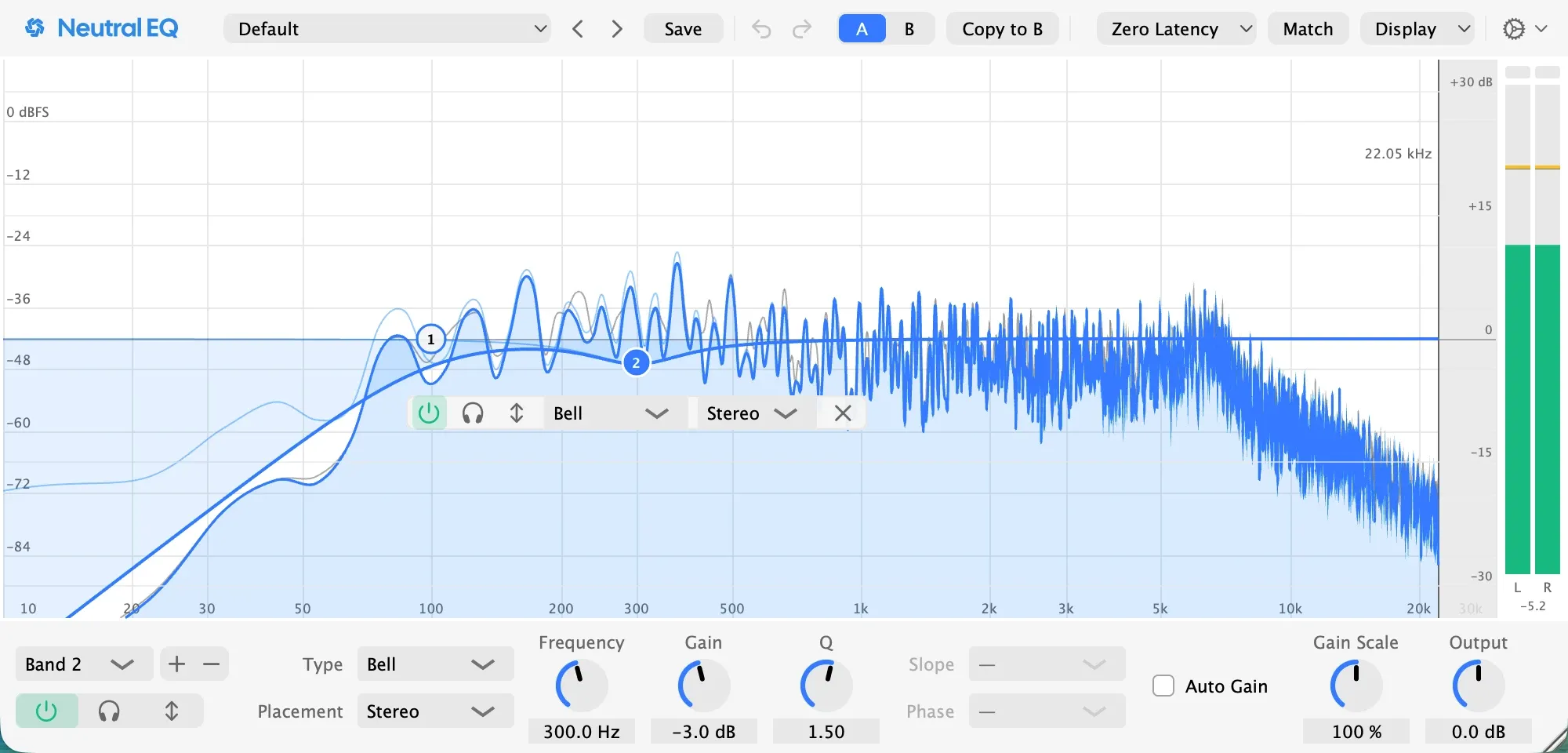
Sweep a narrow boost between 200 and 500 Hz while the beat plays. Where the guitar turns thick and the bass disappears behind it, stop; on this session it was 300 Hz. A cut of two to four decibels there, here three with a Q of 1.5, is the one move almost every amp track needs.
Pro tip: if the mud comes only on the low chords, make the cut dynamic, so the open chords keep their body.
3. Tame the fizz
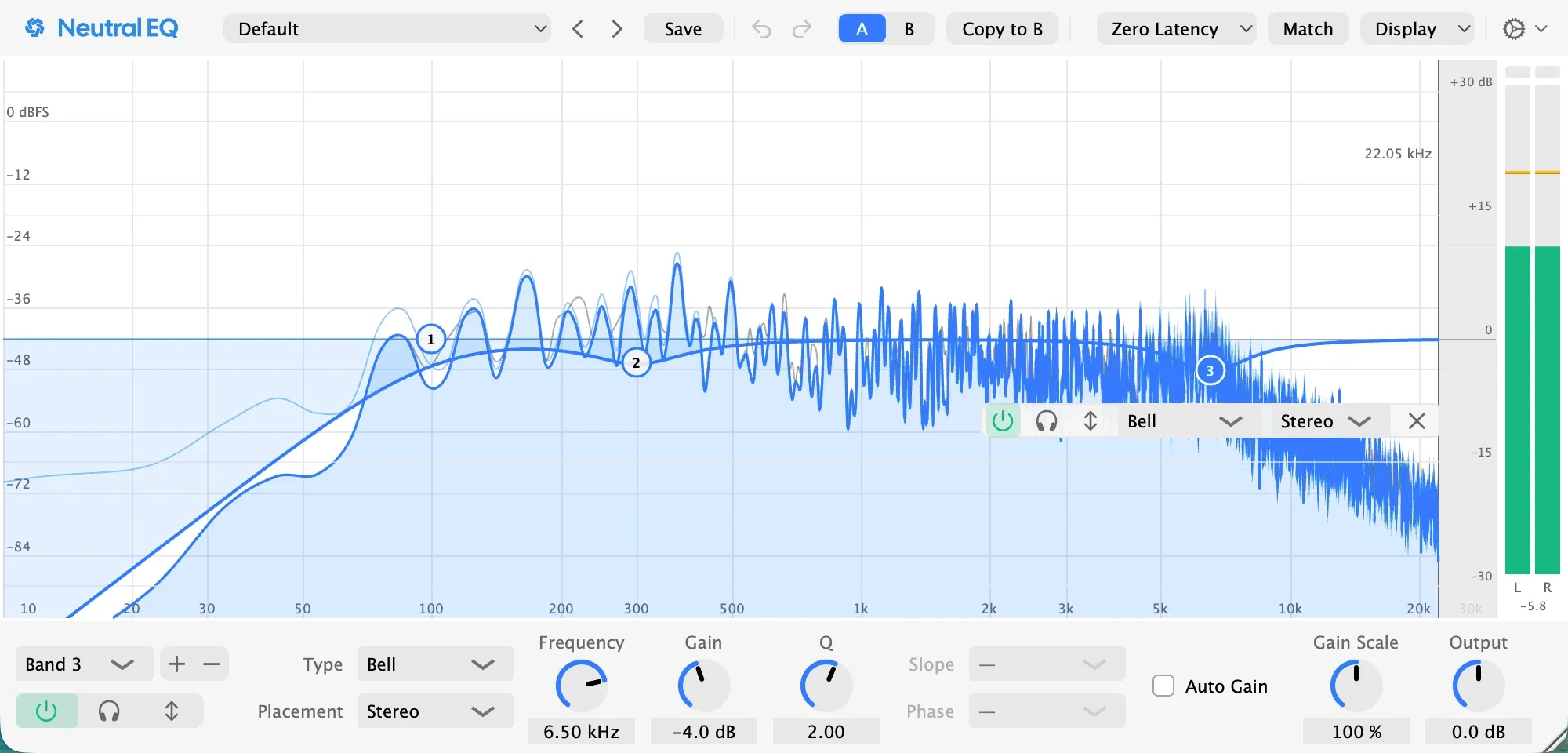
An amp plugin leaves a hash above 5 kHz that a real cabinet and a microphone never pass. Sweep between 4 and 9 kHz for the spot where the chords turn brittle; here it was 6.5 kHz, and a cut of four decibels with a Q of 2 took it out. If the whole top end is hash, a high cut near 10 kHz is the broader version of the same move.
4. Make room for the vocal
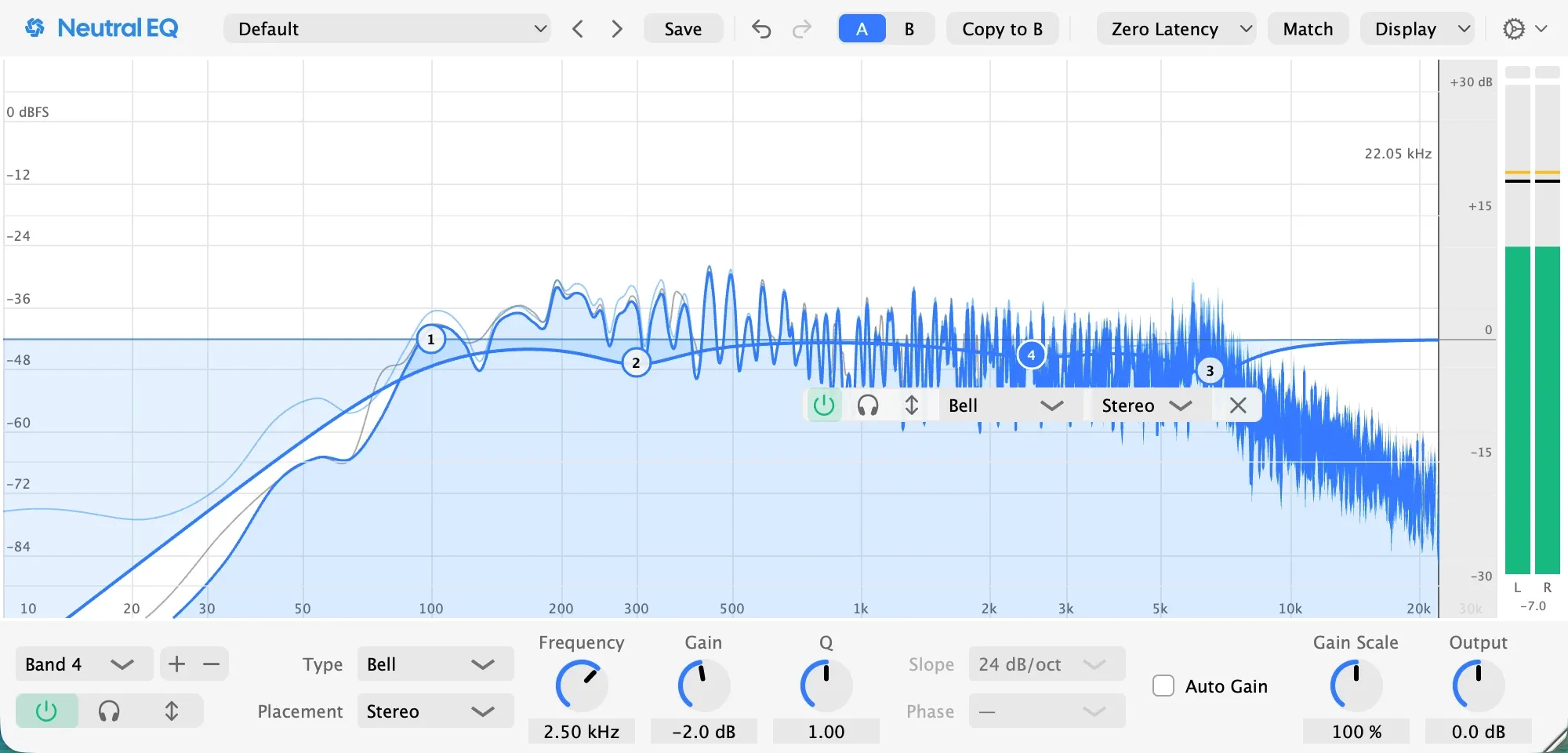
A guitar and a singer both live between 2 and 4 kHz. A small cut on the guitar there, here two decibels at 2.5 kHz with a Q of 1, lets the words through without touching the vocal, and the guitar loses nothing in the mix because the vocal was covering that range anyway. Skip this move on an instrumental.
Check it
Switch the EQ off and on with the whole song playing. The bass should be clearer with it on, the vocal easier to follow, and the guitar no smaller. If the guitar sounds thin, step 1 or 2 is too high; if it sounds dull, step 3 is too wide.
Pro tip: judge at matched level, with Auto Gain on, and by switching the band off in the full mix rather than soloing it.
If it was an acoustic guitar recorded with a microphone
Three moves instead of four. A low cut near 80 Hz, a cut where the body booms between 150 and 250 Hz, found with the sweep, and a shelf of a decibel or two above 10 kHz for air if the mix wants it. The pick and the strings live between 2 and 5 kHz and rarely need a band; a microphone a hand’s width further from the sound hole fixes the boom before any cut.
In Neutral EQ
The Guitar folder holds this page’s starting points: Electric Fizz Tamer is step 3, and Acoustic Body and Air is the recorded case’s boom cut and shelf together. Load one, drag its bands to where your amp rings, and the analyzer shows the chords as they play under the curve. The presets page lists the folder.
Going further
Two guitars at once take opposite cuts. Pan them apart and give each a small cut where the other is lifted, one near 2 kHz and the other near 4 kHz, so both are heard without either being louder.
Heavy guitars take everything deeper. The low cut at 120 Hz or above, the fizz cut wider, and a high cut near 10 kHz, because a high-gain amp plugin makes more of everything the page removes.
A re-amp beats a repair. When a direct take is dry in the session, a different cabinet or a different amp fixes the mud and the fizz at their source; EQ is for what is left after the choice is right.
Questions people ask
What are good guitar EQ settings?
There are no settings, only moves: a low cut near 100 Hz, a cut of two to four decibels where the sweep finds the mud between 200 and 400 Hz, a cut on the amp's fizz between 5 and 8 kHz, and a small cut near 2.5 kHz when a vocal needs the room. The numbers on this page are the ones that worked on this session.
How do I EQ metal guitars?
The same four moves, deeper: the low cut at 120 Hz or higher so the bass and the kick own the bottom, a wider cut on the fizz, and a high cut near 10 kHz to take the hash off a high-gain amp. Two guitars panned apart take opposite small cuts in the upper mids so each is heard.
How do I EQ an acoustic guitar?
A low cut near 80 Hz, a cut of two to four decibels where the body booms between 150 and 250 Hz, found with a sweep, and a shelf of a decibel or two above 10 kHz for air only if the mix wants it. Leave the middle alone; the strings and the pick live between 2 and 5 kHz and rarely need help.
Related pages
Made in Neutral EQ on a session built for this page: a drum machine beat, a synth bass and an amp-sim rhythm guitar in Neutral Tracks, the EQ on the guitar. Every picture is the plugin as it was set for that step.